


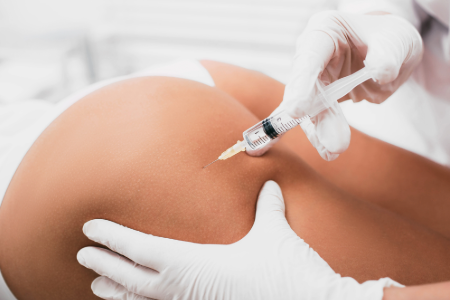
The Women and Equalities Committee (WEC) is calling for high-risk procedures, such as non-surgical BBLs, to be banned immediately without further consultation.
The report, published on February 18, states that the Government is not moving quickly enough to introduce a licensing system for non-surgical cosmetic procedures. This comes after reports of procedures reportedly being performed in precarious locations such as Airbnbs, garden sheds and public toilets by non-healthcare professionals (HCPs).
The report recommends that procedures deemed high risk and which have already been shown to pose a serious threat to patient safety should be restricted to appropriately qualified medical professionals
immediately. However, the report notes that, given the lack of willingness among
medical professionals to perform high-risk procedures such as non-surgical BBLs and liquid breast augmentations, these measures will likely act as a de facto ban in all but the most essential cases.
Sarah Owen, chair of the WEC and Labour MP, commented, “During our inquiry, the Committee heard a powerful and shocking testimony from a woman who developed sepsis after having a non-surgical BBL. Her experience and those of many others should act as an urgent wake-up call to the Government for change.”
On August 7, 2025, the Department of Health and Social Care (DHSC) confirmed plans to introduce a national licensing scheme for non-surgical cosmetic procedures in England. Under the proposed framework, practitioners offering high-risk procedures – including non-surgical BBLs, thread lifting and hair restoration surgery – would be required to be qualified HCPs operating from Care Quality Commission (CQC)-registered premises.
The initial consultation outlined a traffic-light tiered system, which labelled the breast, genitals or buttocks treatments as high risk and therefore red-light procedures. Once introduced, practitioners who breach regulations for the highest risk procedures would be subject to CQC enforcement and financial penalties. However, the public consultation on which procedures