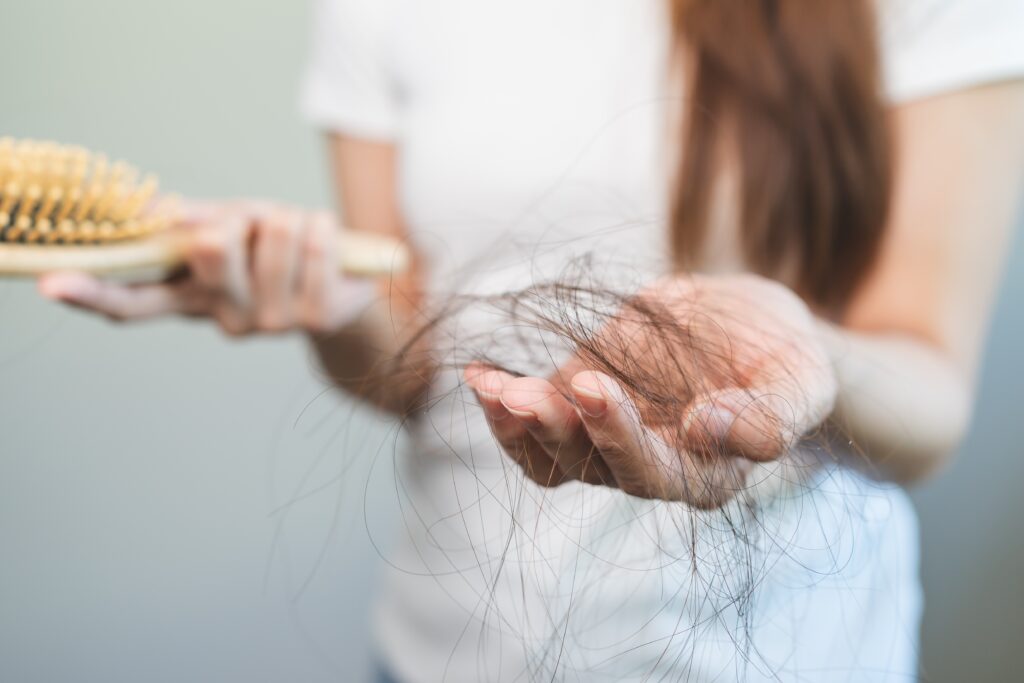
Perimenopause marks a transitional phase in a woman’s life, accompanied by hormonal changes that can trigger various symptoms, including hair loss and thinning.1,2 During the menopause transition, the decline in oestrogen levels is a factor contributing to changes in the hair follicle (HF) lifecycle. Oestrogen has a protective effect on hair health, promoting thickness, strength and overall vitality.
As oestrogen levels decrease, the HFs undergo structural and functional alterations, resulting in phenomena such as thinning, loss of volume and changes in texture. However, it is important to note that the impact of oestrogen decline on hair varies among individuals, influenced by genetic predispositions, environmental factors and lifestyle choices.3
As the body moves through the ageing processes, metabolic rate slows down, affecting nutrient delivery and blood flow to the HFs. Decreased metabolic activity may compromise the availability of…