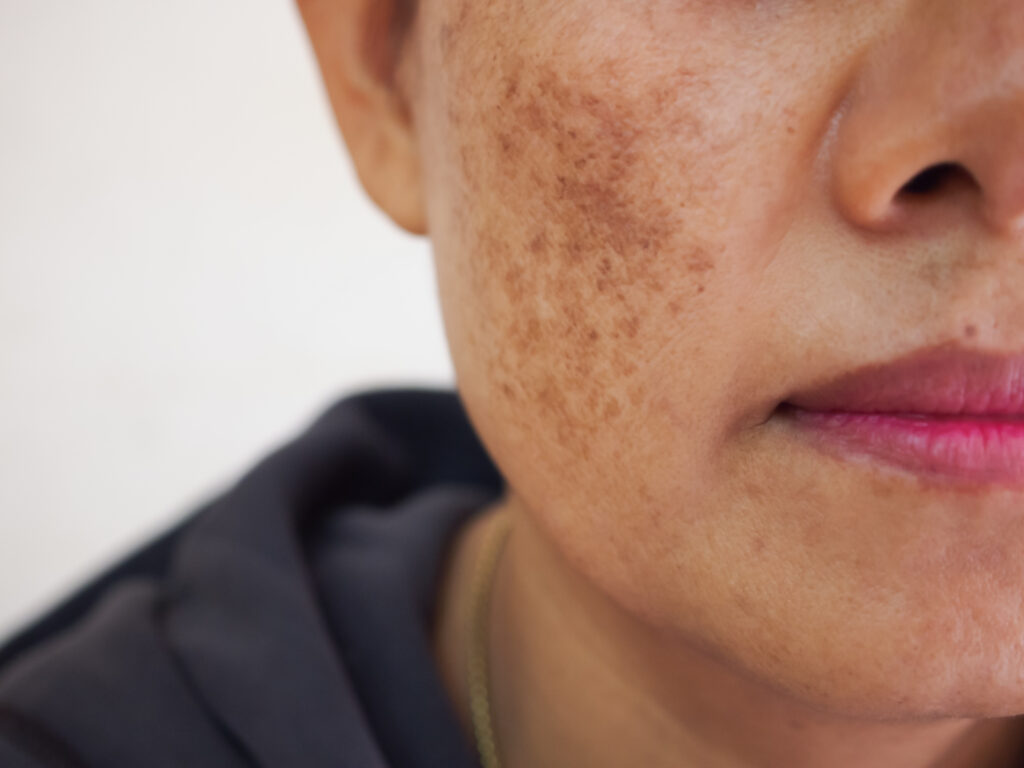
Dr Ginni Mansberg explores the role of topical therapies in the management of pigmentation
Pigmentation disorders are a common and often distressing concern for many people.1 Although typically benign, pigmentation issues can significantly impact a person’s perception of their appearance, often making them feel and look older than their chronological age.1,2
This article aims to delve into the intricacies of pigmentation, explore the various types, explain the underlying mechanisms and provide a comprehensive and up-to-date overview of the most effective topical therapies for managing these conditions.
The protective role of melanin
Melanin plays a vital role in protecting the skin from the harmful effects of UV radiation. It absorbs and scatters UV light, thereby preventing DNA damage and acting as a potent antioxidant by scavenging free radicals.3
Melanin is synthesised within melanocytes located at the epidermal-dermal junction, and involves several key steps facilitated by the enzyme tyrosinase.4 The process of melanogenesis begins in…