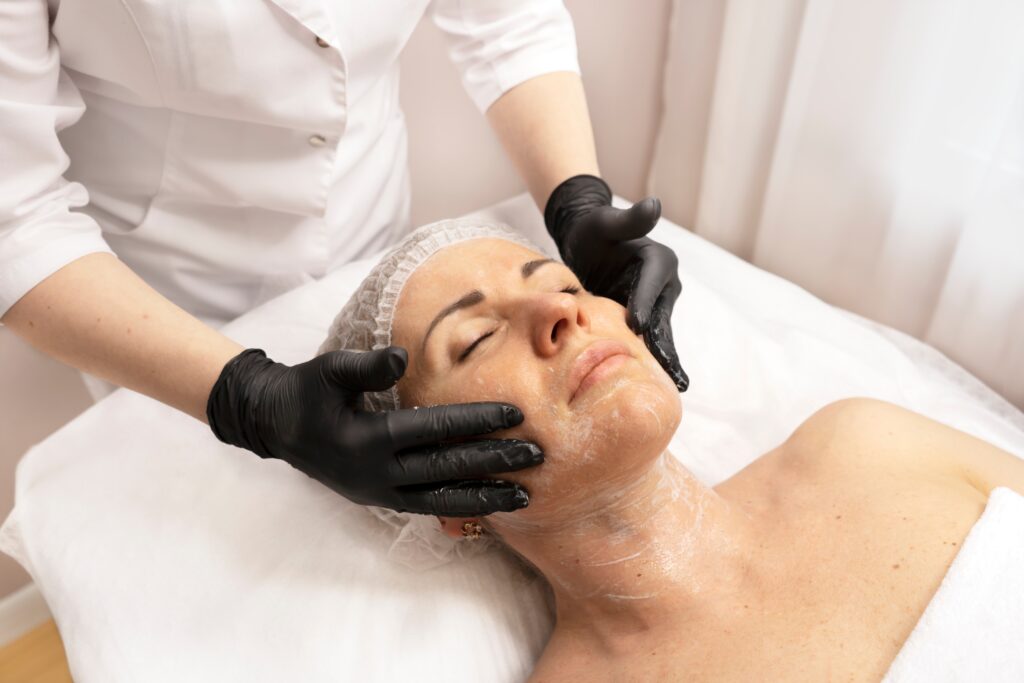
Chemical peels have a long history in aesthetics, dating back to Egyptian times.1 Available in superficial, medium and deep formulations, they continue to be a common and efficacious treatment approach for lines, wrinkles, post-inflammatory hyperpigmentation, melasma, age spots, acne scarring, rosacea and more.
Here we talk to three experienced peel practitioners and trainers, focusing on each depth of peel, the typical active ingredients within the peel and how they should be used appropriately.
Depth: Epidermis.
Mode of action: Mild chemoexfoliation of the corneal cell layer down to the basal cell layer.2 They produce reactive inflammation in the upper dermis, which stimulates neocollagenesis by activating fibroblasts that synthesise new collagen and elastin.3
Targeted concerns: Mild cases of hyperpigmentation, photoageing, acne, acne scarring and fine lines and wrinkles.3
Patient suitability: Fitzpatrick Skin Types I-VI (depending on formulation).2