


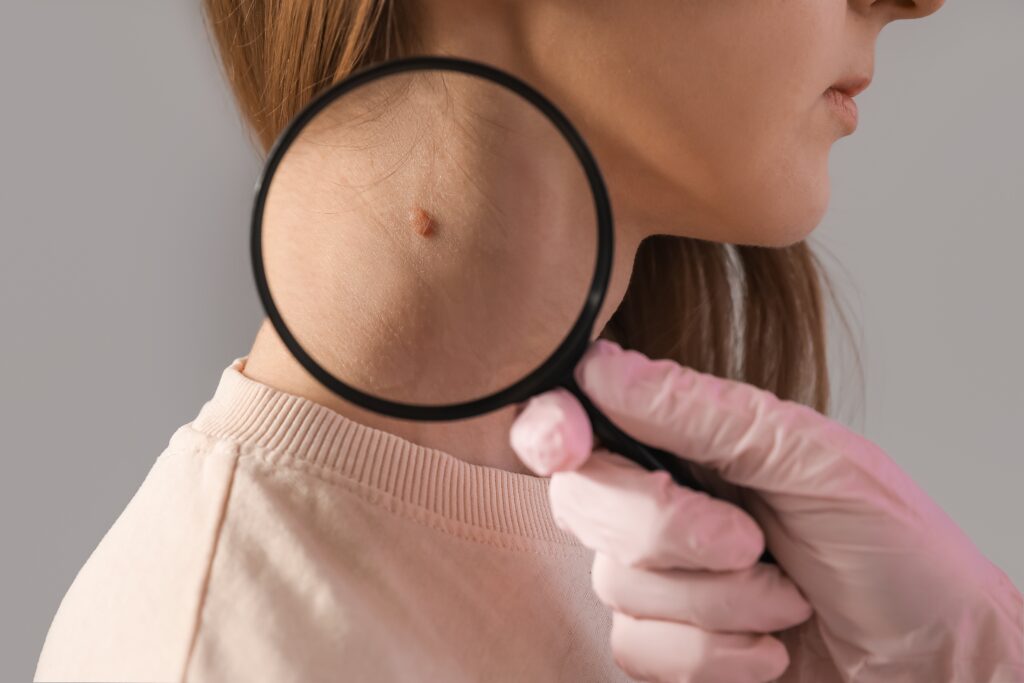
Aesthetics examines skin cancer discovery opportunities in aesthetic clinics
A UK-wide survey has been launched to gather evidence that will inform the development of a new nurse-led model of care for skin cancer services across the UK.1 While the research is focused on designing NHS-led clinics in England, nurses have been questioned across all sectors.
Aesthetic nurse practitioner Leila Kattach, chair of the skin cancer subgroup for the British Dermatological Nursing Group (BDNG) and research lead for the British Association of Skin Cancer Specialist Nurses (BASCSN), has instigated the Nurse Questionnaire Survey on Skin Cancer Care 2025. The aim is to understand existing nurse-led models and develop a patient-centred model that is accessible, viable and accepted by the sector – while strengthening the role of nurses.2
The survey findings will be used to inform updates to the national BDNG Skin Cancer Competency Framework, a structured guideline defining the knowledge, skills and competencies required for nurses working in skin cancer care.3
While the survey predominantly focuses on nurses working within skin cancer services, it highlights the growing need to expand the workforce by identifying areas where members of the medical community can broaden aspects of their roles to include elements of skin cancer care. Kattach notes that aesthetic practitioners occupy a privileged position, enabling them to observe patients’ skin regularly and at close range, thus being able to support early detection and prevention efforts in parallel with NHS skin cancer services.
The burden of skin cancer care
There are 17,500 new cases of melanoma skin cancer every year.4 However, the UK has a limited supply of consultant dermatologists to handle these cases, as consultant dermatologist Dr Derrick Phillips explains, “For a population approaching 70 million, we have roughly 700 to 800 practising consultant dermatologists.” However, in the UK there is variation in how skin cancer units utilise the skills of specialist nurses.5
While dermatology nursing is a highly advanced field, with some practitioners opting to complete a masters of science in dermatology, Kattach explains that practices vary between organisations and aspects of knowledge transfer happen informally through peer-to-peer conversations. “I want to understand who is doing what, and where. For instance, there are nurses in England working in some services with no substantive dermatology consultant and are likely operating with a high degree of independence,” says Kattach.
Early detection opportunities in aesthetics
Kattach believes there is opportunities for nurses working in medical aesthetic clinics to align their practice with elements of skin cancer care – particularly around being able to recognise suspicious lesions, offering prevention advice and making timely referrals. Kattach explains that conversations can motivate patients to check their skin and seek professional guidance.
A research project in the US demonstrated that implementing melanoma risk screening questionnaires in a medical aesthetic practice could help identify at risk patients and trigger referrals.6 In one pilot, 26% of 211 patients were classified as at risk for melanoma through this approach.6
While dermoscopy takes years of training and is not a necessary skill for non-specialists, Dr Phillips supports the view that all practitioners in medical aesthetic clinics who are treating skin should receive education on skin cancer, saying, “Aesthetic practitioners should receive basic training on how to identify basal cell carcinomas, squamous cell carcinomas and melanomas, as they are well placed to identify suspicious lesions at an early stage given how regularly they assess the skin.”
However, Dr Phillips also highlights existing knowledge gaps within the specialty. He explains, “Dysplastic lesions such as actinic keratoses are often misdiagnosed by aesthetics practitioners and treated as redness or rosacea. This reflects a knowledge and skill gap that can be addressed with better education.” Kattach signposts aesthetic practitioners to providers such as skin cancer charity Skcin which organises courses that help practitioners build a basic understanding of skin cancer red flags, enabling practitioners to identify concerning lesions and refer patients appropriately.7
While Dr Phillips does support aesthetic practitioners maintaining a clinical eye and referring anything that is suspicious to GPs or dermatologists, he does not support aesthetic practitioners offering skin cancer screening and removal, unless they are qualified consultant dermatologists and plastic surgeons with appropriate expertise.
Tania von Hospenthal, director of Transformation and Quality Improvement at the British Association of Dermatologists (BAD), states that any clinician diagnosing skin cancer must be trained in skin disease recognition and dermoscopy, and those performing surgery must be trained in appropriate surgical techniques. Dermatology consultants are fully trained to manage skin cancer, while Mohs surgeons require post-certificate of completion of training (CCT) fellowship training. Specialty doctors, locums, General Practitioners with Extended Roles (GPwERs), and nurse specialists involved in skin cancer care must demonstrate accredited competencies under recognised BAD, Royal College of General Practitioners (RCGP) or BDNG frameworks and work strictly within their approved scope, which is assessed by the Care Quality Commission (CQC).
Dr Phillips advises that practitioners who identify concerning lesions should refer patients via the urgent skin cancer pathway for specialist review, which typically takes place within two weeks. He explains, “This pathway functions well and prevents NHS dermatology departments from being overwhelmed with non-standardised referrals from multiple sources. I would strongly encourage practitioners to continue utilising the established GP–NHS dermatology pathway.”
Practical steps
While the findings from the survey will not be available until late 2026, aesthetic practitioners can embed elements of skin cancer awareness into their everyday appointment practices. Consultations can be used to ask holistic questions about patients’ SPF use and any skin changes they may be concerned about, which Kattach believes can act as check in points. At these opportunities, practitioners can encourage patients to consult their GP or consultant dermatologist for further guidance.
Overall, the practitioners agree that for aesthetic practitioners, it is not about becoming skin cancer screening services, but about making every contact count – recognising red flags, reinforcing prevention and ensuring patients are directed swiftly into established NHS pathways when needed.
References
- British Association of Skin Cancer Specialist Nurses (BASCSN), Nurse Questionnaire Survey on Skin Cancer Care 2025, Bournemouth University, 2025 https://app.onlinesurveys.jisc.ac.uk/s/bournemouth/nurse-questionnaire-survey-on-skin-cancer-care-2025-1skin-cancer-competencies-final.pdf
- Participant Information Sheet: Nurse Questionnaire Survey, Bournemouth University, created 4 September 2025 (PDF), https://www.bournemouth.ac.uk/sites/default/files/asset/document/Nurse-Questionnaire-Survey-Participant-Information-Sheet_0.pdf (accessed date you accessed the document).
- British Dermatological Nursing Group (BDNG), Skin Cancer Competency Framework for Nurses https://bdng.org.uk/wp-content/uploads/2017/02/skin-cancer-competencies-final.pdf
- British Association of Dermatologists, ‘Dermatologists call for AI roadmap to help tackle UK’s most common cancer safely’, Skin Health Info https://www.skinhealthinfo.org.uk/dermatologists-call-for-ai-roadmap-to-help-tackle-uks-most-common-cancer-safely/
- Getting It Right First Time (GIRFT), Dermatology Report, September 2021 https://gettingitrightfirsttime.co.uk/wp-content/uploads/2021/09/DermatologyReport-Sept21o.pdf
- Mogle M, Vortman R and Miller A, Identifying Patients At Risk for Melanoma in an Aesthetic Practice, Plastic and Aesthetic Nursing 44(3) (2024) 183–187. doi: 10.1097/PSN.0000000000000566. https://pubmed.ncbi.nlm.nih.gov/39028472/Health Education England, Making Every Contact Count (MECC)
- SKCIN (The Skin Cancer Information Network), SKCIN https://www.skcin.org/