


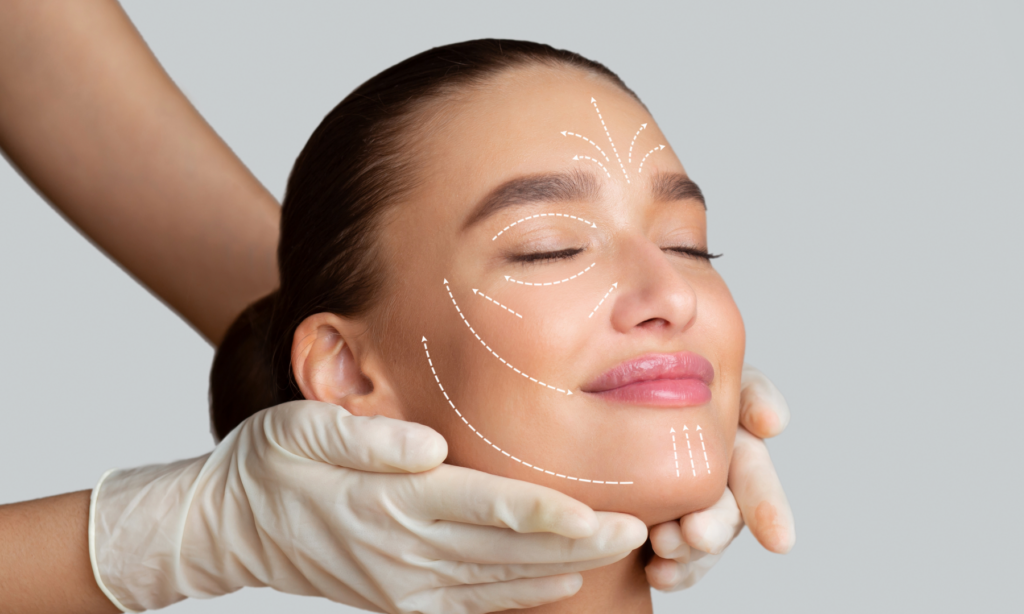
The Cadogan Clinic has co-authored a peer-reviewed study demonstrating that ChatGPT‑5 can assess facelift candidacy from standardised facial photographs.
The study, published in Aesthetic Plastic Surgery, was led by lead author consultant plastic surgeon Mr Ayman Saeed, as well as consultant plastic surgeon Mr Bryan Mayou. Co-authors include consultant plastic surgeon Mr Kemal Tunç Tiryaki.
The study found that out of 22 cases, ChatGPT‑5’s decisions about who is a candidate for facelift surgery matched the surgeons’ consensus 95.5% of the time, with a Cohen’s κ of 0.91, which indicates agreement beyond chance, according to the study. When it came to individual facial ageing features, such as skin laxity and tissue descent, agreement between ChatGPT‑5 and surgeons ranged from 81.8% to 90.9%.
For severity grading of those features, ChatGPT‑5 and surgeons had the same agreement in 77.3% of cases, and when they disagreed, it was only by one adjacent grade, the study shares.
For adjunct procedure recommendations (additional procedures alongside a facelift), agreement was lower than for basic candidacy, but the top one or two options suggested by ChatGPT‑5 still overlapped meaningfully with surgeons’ recommendations, according to the study.
Mr Mayou commented, “This research demonstrates that artificial intelligence (AI) may have the capacity to support surgeons by providing consistent, objective analysis of facial ageing patterns from photographic data. While AI will not replace clinical examination, experience or surgical judgement, it may in time play a valuable role in enhancing triage, patient education and standardisation of elements within a structured pre-consultation assessment.”
Mr Saeed, added, “This study is the first in a programme of research exploring how artificial intelligence can be responsibly integrated into aesthetic facial surgery. The results are encouraging. But we must be careful to define what AI can and cannot do. It can identify patterns in photographs; it cannot listen to a patient, examine tissue quality, or understand what someone hopes to achieve from surgery. Our next studies will examine whether patients themselves are willing to engage with AI-assisted assessment, and how these tools perform at scale across diverse populations.”