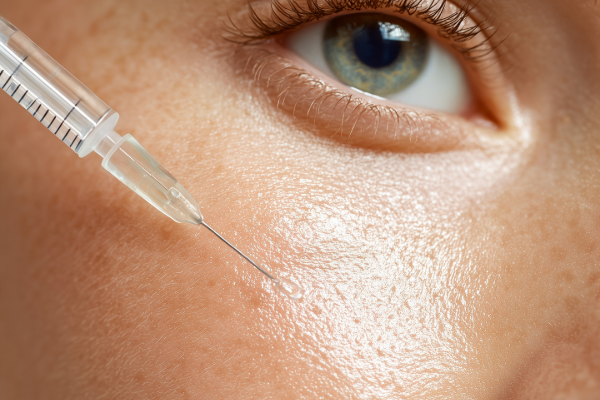
Dr Olivia McCabe-Robinson examines the clinical rationale behind injectable amino acid
Medical aesthetics is undergoing a philosophical reorientation. Where volumisation and neurotoxin relaxation once dominated clinical conversations, the field is increasingly oriented around tissue quality. A category of treatment referred to as biorestoration has begun to crystallise within medical aesthetics. It is distinct from biostimulation in a mechanistically important way. Rather than triggering a wound-healing signalling cascade, biorestoration aims to replenish the raw metabolic substrates that make regeneration physiologically possible.1 As fibroblast activity declines with age, the availability of essential substrates required for collagen and elastin synthesis becomes increasingly limited and this reduction in amino acid availability contributes to impaired dermal architecture.1
The structural integrity of the dermis depends fundamentally on a well-maintained extracellular matrix (ECM), composed primarily of type I collagen, type III collagen, elastin, hyaluronic acid (HA)…