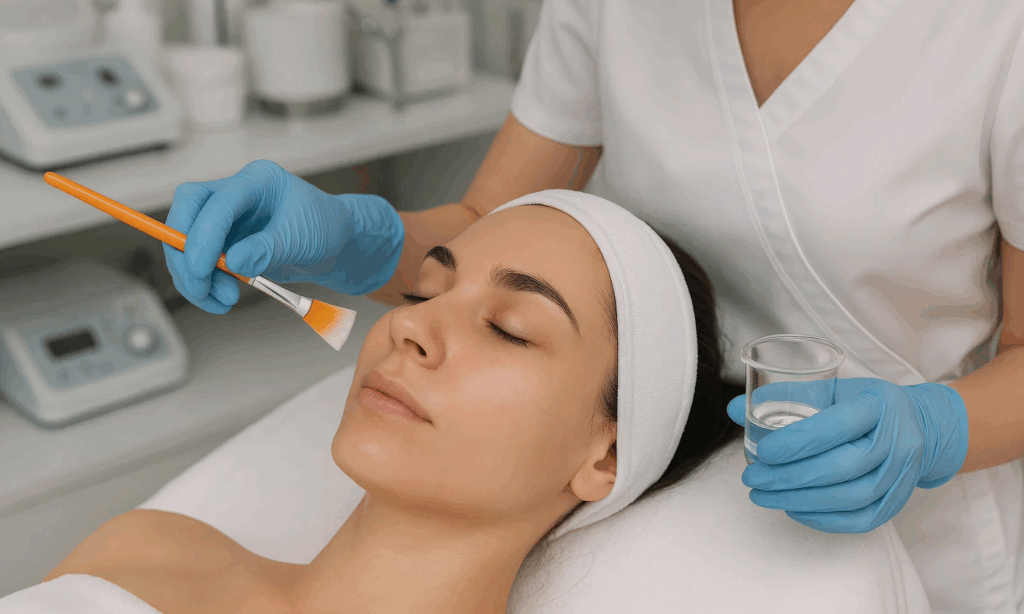
Dr Aiza Jamil illustrates how to integrate chemical peel applications into clinical practice Chemical peels are dermatological treatments designed to improve the appearance of the skin, typically on the face, neck or hands. During the procedure, a chemical solution is applied to exfoliate and remove damaged outer layers, revealing fresh skin that is typically smoother, less wrinkled and more evenly toned. They are commonly used to address concerns such as fine lines, acne, pigmentation, scarring and sun damage.1
Peels can be categorised into three depths; superficial, medium and deep.2 This article provides guidance on chemical peels, outlining each category in detail, examining their formulations, ideal applications and safety considerations to ensure optimal treatment outcomes.
Understanding chemical peels
As chemical peels can be invasive procedures, careful preparation is essential to protect the skin and minimise the risk of complications.