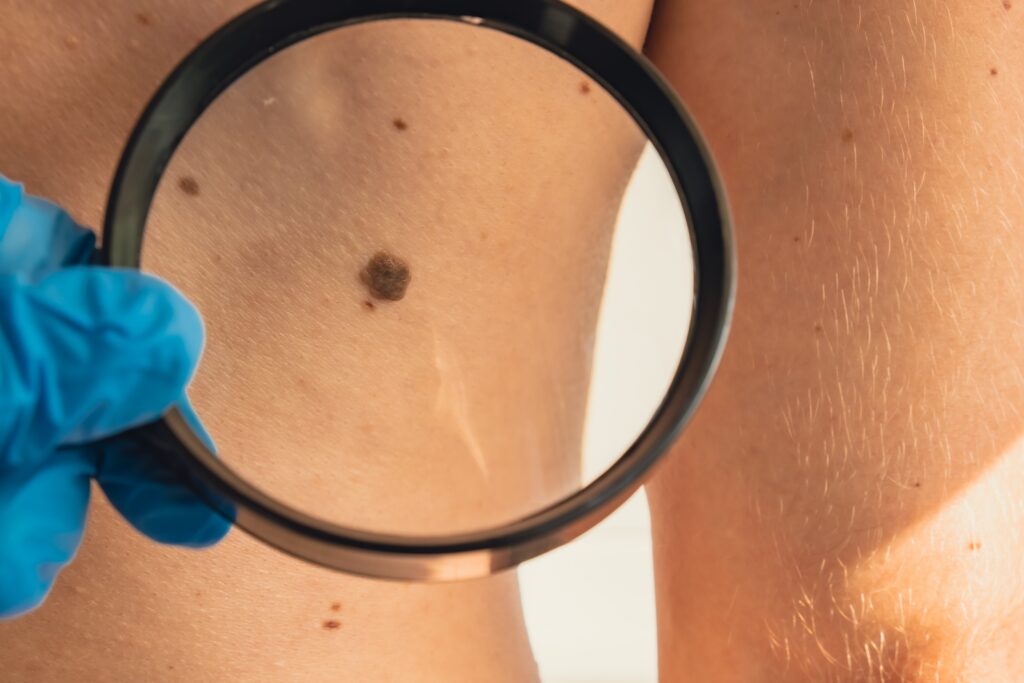
Nurse prescriber Claire Amos explores how medical aesthetics can play a vital role in skin cancer surveillance
Skin cancer is among the most commonly diagnosed cancers in the UK. Melanoma mortality has increased by 148% since the early 1970s, although rates have remained broadly stable over the past decade.1 Since the early 1990s, the incidence of non-melanoma skin cancers has risen by 169%, with a further 14% increase projected between 2023 and 2025 (data pending release).2
Although melanoma mortality is projected to decline by approximately 11% between 2024 and 2026 (data pending release),the overall burden of disease remains substantial.1 In England alone, more than 224,000 skin cancer diagnoses – including both melanoma and non-melanoma skin cancers – were recorded in 2019, representing a 26% increase compared with 2013.3
These significant numbers reflect multiple factors, including increased recreational sun exposure, tanning bed use, an ageing population and greater awareness and screening.4 Whatever the drivers…