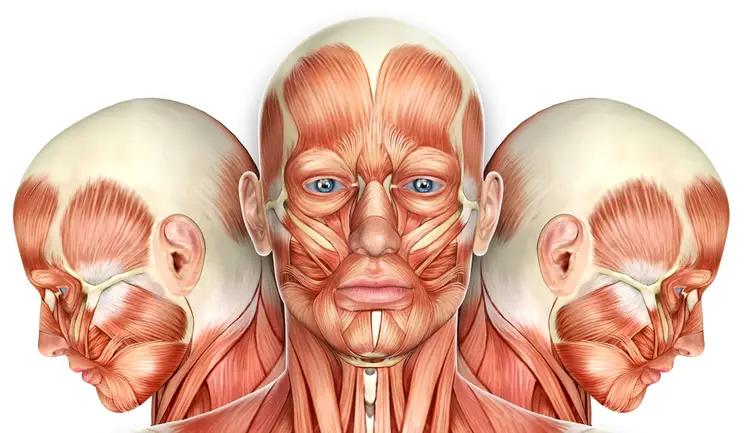
The anatomy and significance of the superficial musculo-aponeurotic system (SMAS) is well described, with cadaveric studies continuing to emerge to further enhance clinical awareness. Whilst the context of this plane is acknowledged in the surgical literature, this layer represents important boundaries to the non-surgical clinician, at defined anatomical regions.
This paper captures the salient anatomical descriptions and considerations, and summarises some of the key findings from current literature.
The third anatomical layer of the face forms one continuous plane, encompassing each facial region, although for descriptive purposes, different names are given to certain parts, often according to the superficial muscle contained within the anatomical region.1
It is named the galea over the scalp, the superficial temporal fascia over the temple, (nomenclature describing the temporal fascia is inconsistent within the literature),2 the orbicularis fascia in…