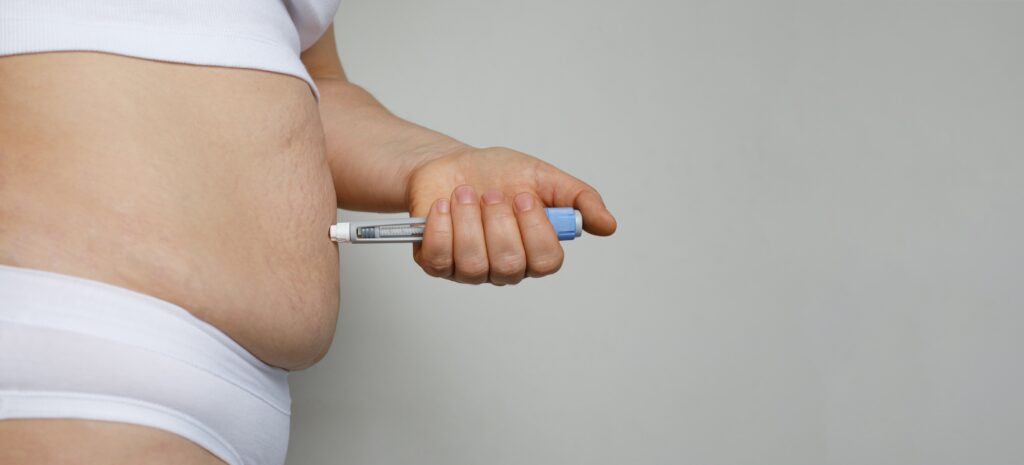
Miss Aoife Naughton, Dr Sean Noronha and Miss Jenny Doyle discuss the mechanism of action for weight loss injections and consider associated facial aesthetic concerns
The popularity of weight loss injections has significantly increased over the last two years, having caused a global shortage throughout 2024.1 This is only set to rise, with NHS figures show that prescriptions for weight loss injections have skyrocketed, as 1.5 million doses given in 2024 compared to 81,000 in 2019.2
The use of the weight loss injections can come with some side effects, which are translating through to an uptick in patients searching for both surgical and non-surgical treatments to remove some of the loose skin and tighten tissues following the weight loss. In this article, we outline the mechanisms of weight loss injections, and provide treatment options for patients experiencing associated aesthetic side effects.
What are weight loss injections?
The most prescribed weight loss medications are semaglutide (Wegovy), liraglutide (Saxenda), and tirzepatide (Mounjaro).2 First approved in 2019 by the US Food and Drug Administration (FDA) as a…