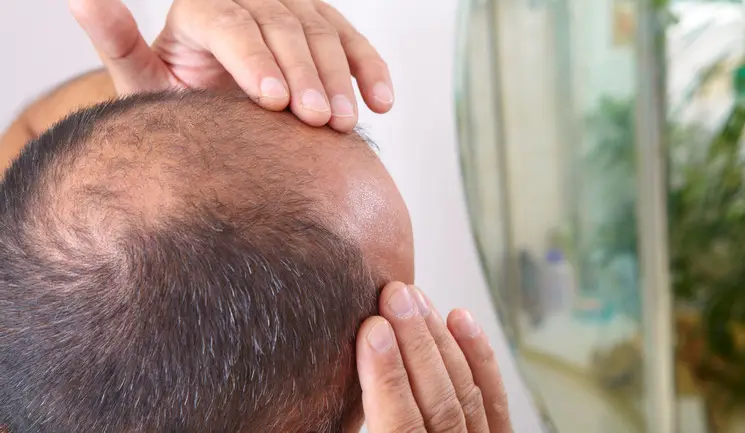
Genetics play a role in hair disorders from childhood through to old age. Genetic hair disorders can exist individually or as part of syndromes which may have significant health consequences, particularly those which present in childhood.1
Aesthetic practitioners have several tools to improve the overall appearance of hair, but diagnosing the underlying cause of hair loss, in my experience, is key to managing expectations. Hair loss conditions can be scarring or non-scarring. In scarring alopecia, the hair follicles are destroyed, leading to permanent hair loss. In non-scarring alopecia the hair cycle is altered, but the hair follicle is preserved allowing hair regrowth. Hair loss conditions which are most likely to present to aesthetic clinics about which there have been most developments in genetics in the past decade, are the non-scarring forms of alopecia – male androgenetic alopecia…