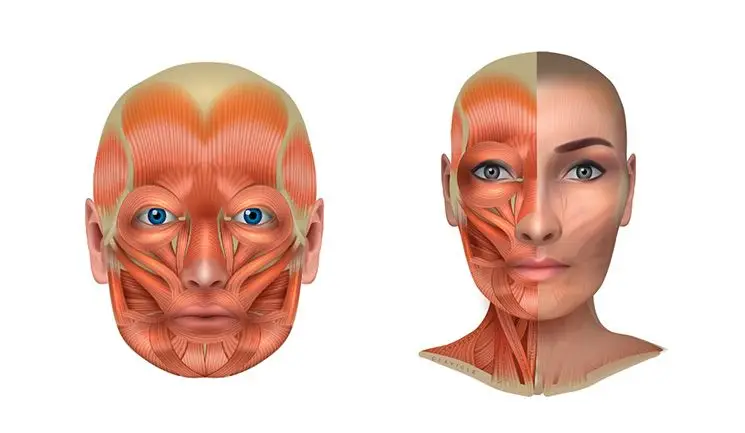
The dynamics of facial mimetic muscles and their impact on ageing is complex to say the least. There is abundant literature on the changes affecting soft tissue, fat compartments and facial bony skeleton leading to facial ageing.1,2
However, there is lack of concordance in accepting the postulated mechanisms influencing facial mimetic muscle/s changes with ageing and their response to treatment with facial fillers
The literal meaning of myomodulation is the exertion of a modifying or controlling influence on function or activity of muscle/s. The modulation of muscle/s can be as a result of a chemical influence as in the use of neuro-toxins such as botulinum toxin A, in which case it is known as neuro-modulation.3,4 The other type of modulation is when facial fillers like hyaluronic acid (HA) are injected adjacent to mimetic muscles, known as myomodulation, as discussed in…