


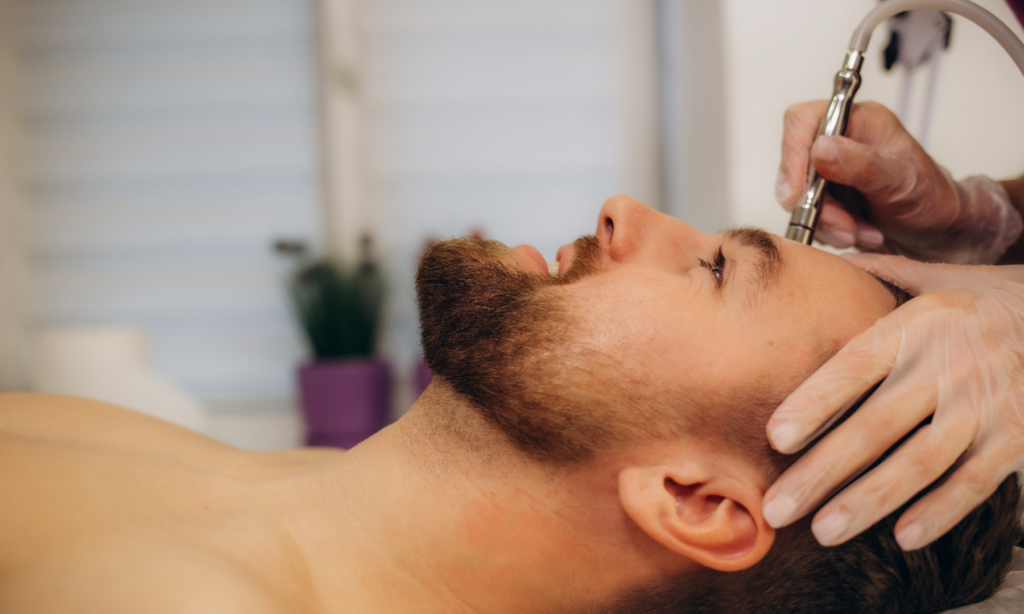
Aesthetics explores the factors behind last year’s overall decline in male cosmetic and non-surgical procedures
The British Association of Aesthetic Plastic Surgeons (BAAPS) has published its annual audit, revealing that cosmetic surgery among men remained stagnant in 2025, with procedures declining by 10% overall. Based on data submitted by 237 BAAPS members, the audit found that rhinoplasty procedures fell by 18%, otoplasty by 17% and liposuction by 7%.¹ Non-surgical treatments also declined, with botulinum toxin procedures decreasing from 438 in 2024 to 409 in 2025, while dermal filler injections dropped from 178 in 2024 to 141 in 2025.¹ ² The recent findings continue a broader downward trend in male cosmetic procedures seen over the past five years. Men accounted for 8% of all cosmetic procedures in 2020, before stabilising at around 7% from 2021 to 2023.³-⁶ In 2024, that figure fell further to 6.5%, then to 6.1% in 2025, marking the lowest proportion recorded in recent years.¹ ²
Aesthetics spoke to specialty professionals to explore why men still only represent a small percentage of cosmetic procedures compared to women, and how the medical aesthetics community can adapt its education, marketing and representation to better cater for this patient base.
Understanding male hesitancy towards aesthetics
Historically, male patients have accounted for a small proportion of cosmetic procedures, according to Ms Nora Nugent, plastic surgeon and president of BAAPS. Referring to the decline in procedures taking place in 2025, she explains, “This doesn’t necessarily signal a major shift in attitudes. It more likely reflects normal year-to-year variation influenced by wider economic factors and evolving patient priorities.” Ms Nugent argues demand is not disappearing, but evolving toward more discreet, regenerative and longevity-focused treatments. She explains, “This is part of a broader shift or increase in facial rejuvenation surgery due to more awareness, lessening of the fear of ‘looking done’ or having tell-tale signs of having a facelift due to advances in modern facelifting and a shift in preference towards procedures with greater longevity.”
Consultant ophthalmologist and oculoplastic surgeon Miss Elizabeth Hawkes, whose male patients make up 35% of her patient base, adds that men are less likely to seek aesthetic treatments than women due to the fear they will look like they have had work done. She explains, “It’s not like they don’t want to have the treatments; they do. But a lot of it is fear that they may look unnatural.” Men are also less likely to undergo aesthetic treatments because the specialty has historically been marketed predominantly towards women, according to aesthetic practitioner Dr Sina Salimi, who sees around 10-15% of male patients in his practice. He elaborates, “Many male patients still perceive cosmetic treatments as something not designed for them, or associate them with stigma, vanity or loss of masculinity.”
How the specialty can better engage male patients
The aesthetics specialty should create a more gender-inclusive environment, according to Dr Salimi, through male-focused education, neutral branding, realistic marketing and consultation approaches tailored to male patients to ensure continued growth within this demographic. He elaborates, “At the moment, much of the marketing is centred around highly polished, airbrushed men with square jaws and a very ‘perfect’ or metrosexual image. In my opinion, this does not represent the majority of male patients.” Dr Salimi explains that the focus should instead be on everyday people such as working professionals, fathers, tradesmen and men from all age groups who simply want to look fresher, healthier or more confident. He continues, “An advert could show a group of friends meeting at the pub, where one casually mentions having had a facial treatment or anti-wrinkle treatment, leading to an open and positive conversation among friends. I believe this type of representation would make male aesthetics feel more approachable, inclusive and socially acceptable to a much wider audience.”
Building on the assumption that many men are fearful of “looking done” – something that may act as a barrier to seeking treatment – Miss Hawkes finds that male patients are typically drawn to her practice through strong clinical reviews, realistic before-and-after images and word of mouth. “In my marketing, I always talk about how I do very natural work, and when doing patient analysis, it’s clear this is what draws men into the clinic the most,” she says.
Anatomical differences and education
In educational environments such as conferences or training courses, male aesthetics should be taught as a dedicated area of medical aesthetics, focusing on male anatomy, ageing patterns, masculine proportions, consultation styles and avoiding feminisation, says Dr Salimi. He notes, “This should include live male models, male case studies, as well as specific treatment planning and practical teaching tailored specifically to male patients.”
Miss Hawkes highlights that the courses should also move away from just the stereotypical male model used, typically someone in their 20s-30s only undergoing jaw definition, but also representation of 40–60-year-old men with a diverse range of needs, to show greater diversity in treatment. “I use a lot of Sculptra, Profhilo and botulinum toxin, as well as dermal fillers, but not just to enhance the jaw – also for the mid-face, as not all men want that sharp jaw look, especially the older cohort,” she says.
The future of male aesthetics
Overall, despite Miss Hawkes explaining she has seen more men attending clinics, a genuine fear of ‘looking done’ has potentially contributed to a lack of growth in this area overall. According to Miss Hawkes, “They want to look less tired, they want to look fresh. But the key thing is they want a natural look.” Dr Salimi concludes that once men understand that treatments can be discreet, natural-looking, and specifically tailored to male anatomy and masculine features, “they become far more comfortable seeking advice and treatment.”