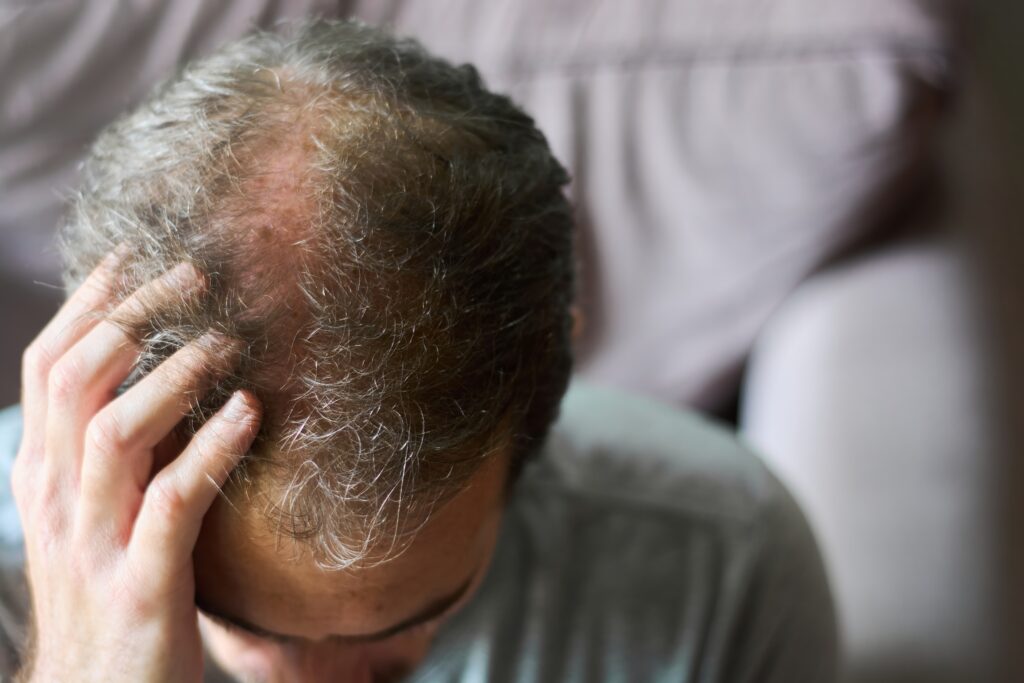
Mr Vahe Karimyan outlines patient selection, treatment protocol and monitoring for fractional non-ablative laser as an adjunct in androgenetic alopecia
Androgenetic alopecia (AGA) is the most common cause of hair loss, affecting approximately 80% of men and 50% of women during their lifetime.¹⁻³ It is a chronic, progressive, patterned loss in which dihydrotestosterone (DHT), produced locally from testosterone by 5-alpha-reductase, acts on genetically susceptible follicles, shortens anagen and progressively miniaturises terminal hairs towards vellus hairs.¹⁻³ Its psychological impact can be substantial.² Current pharmacological treatments include minoxidil, finasteride and dutasteride (topical or oral), which act mainly on the androgen pathway or on the hair cycle and remain the foundation of care. However, energy-based treatments are emerging in this area, particularly non-ablative laser. This is because perifollicular blood flow is reduced, with lower transcutaneous oxygen tension and subcutaneous flow in balding than in non-balding…