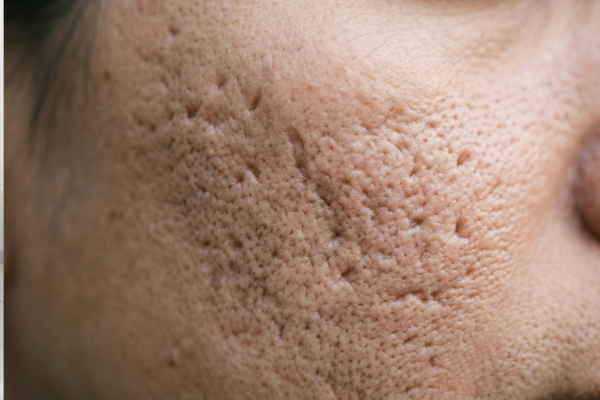
Independent nurse prescriber Bernadette Tobin examines the role of polynucleotides for acne scarring treatment
As interest in polynucleotides (PNs) continues to grow, the clinically useful question is not simply whether they can ‘treat acne scars’, but which component of the scar they can realistically change. A tethered rolling scar, a sharply defined ice-pick scar and diffuse shallow atrophy are structurally different problems. That distinction should determine whether PNs are used alone, as an adjunct or not at all.¹⁻³
Acne scarring results from altered wound healing following inflammation, with loss or excess of collagen producing atrophic, hypertrophic or keloid scars. Atrophic scars are the most common facial presentation and are generally classified as rolling, boxcar or ice-pick scars. Each has different structural characteristics, meaning a treatment that improves overall dermal quality may still be insufficient for a deeply tethered or sharply defined scar.¹⁻³
Current evidence suggests that PNs may improve aspects of atrophic scarring and surrounding skin quality, but their most credible role is as a regenerative option within a wider morphology-led…