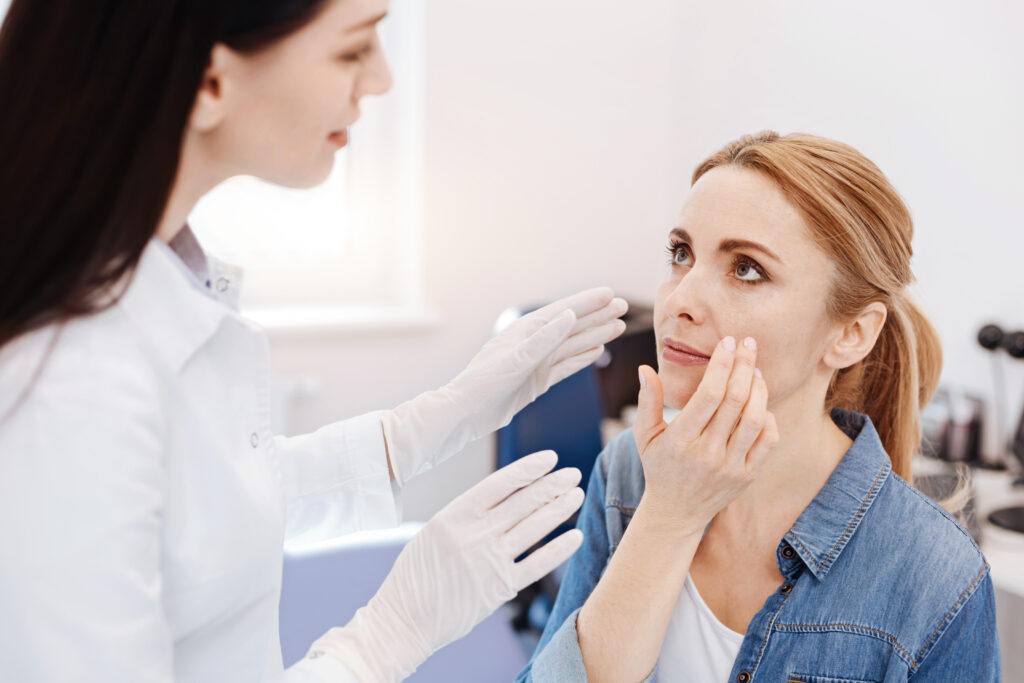
Nurse prescriber Khatra Paterson shares a topical treatment regimen to address melasma concerns
Melasma is a skin condition characterised by brown or sometimes grey-blue flat macules and patches of discolouration of the skin. The cause is thought to be due to melanocytes, the cells that produce melanin, producing excessive amounts of the pigment, darkening the affected areas.1 Melasma typically affects facial areas; the cheeks, forehead, nose, upper lip and chin.2 The condition can have a profound effect on patients’ self-esteem.3
Causes of melasma
The epidermis contains cells called melanocytes, located in the basal layer, which are responsible for producing all the melanin found in the epidermis. They synthesise melanin within vesicles called melanosomes, which are then transported along finger-like melanocyte dendrites and transferred into surrounding keratinocytes. Approximately 36 keratinocytes surround each melanocyte; it is the presence of the melanin-containing melanosomes…