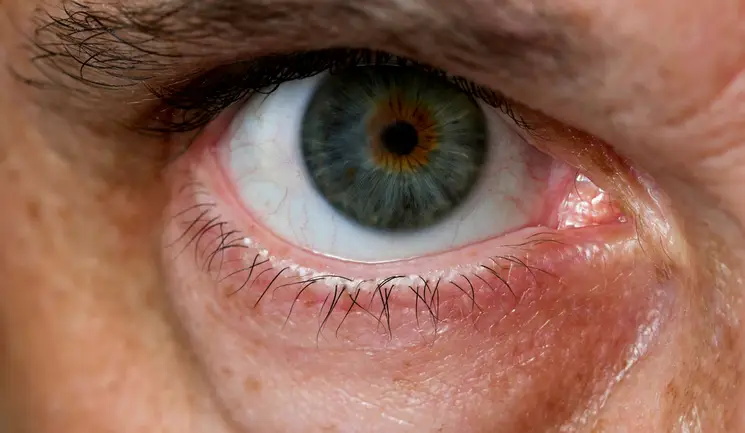
Puffy, swollen eyelids are one of the common manifestations of under-eye ageing. Most patients with ‘eye bags’ present with skin laxity, a herniation of intraorbital eyelid fat, periorbital weakening of the soft tissues, bony resorption and a tear trough deformity.1
Although ‘baggy eyelids’ can be hereditary and are mainly a cosmetic concern, swollen eyelids can often be caused by seasonal allergies, blepharitis2 and, rarely, can be a cause of serious underlying conditions such as thyroid eye disease (over or under-active) or fluid retention due to compromised renal and liver function.1,3
Some people develop ‘saddle bags’; a mound with laxity of the skin and orbicularis muscle around the lower eyelid that starts accumulating fluid at the lid cheek junction. These ‘saddle bags’ can be split into two categories: a malar mound, which is a soft tissue elevation protruding from the lateral…