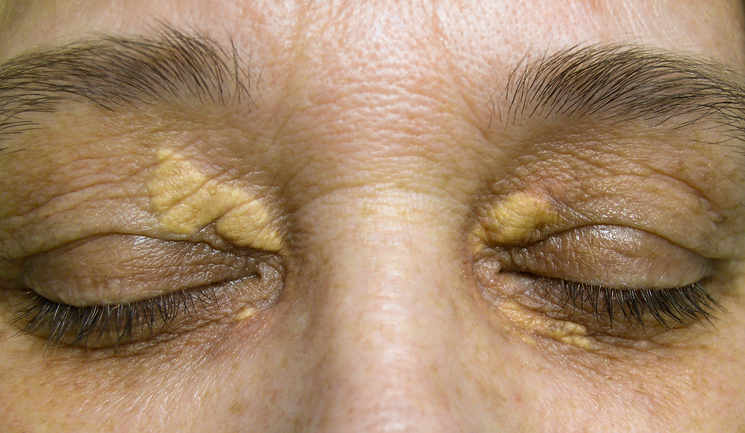
Xanthelasma, also called xanthelasma palpebrarum (XP), are yellowish papules and plaques caused by localised accumulation of lipid deposits commonly seen on the eyelids. The global prevalence is estimated at 4%,1 with an incidence of 1.1% in women and 0.3% in men.2 The age of onset can range from 15 to 73 years, although typical peaks are seen in the fourth and fifth decades. In around half of the cases it can be associated with an underlying hyperlipidaemia and a presentation prior to the age of 40 should prompt screening to rule out underlying inherited disorders of lipoprotein metabolism.3
Whilst the exact pathogenic mechanism is not fully understood, cutaneous xanthelasma represent the deposition of fibroproliferative connective tissue associated with lipid-laden histiocytes, also known as foam cells.4
Primary hyperlipidaemia is caused by genetic defects in the receptors or enzymes involved in lipid metabolism. Inherited disorders of low-density lipoprotein (LDL) cholesterol metabolism are typical…