


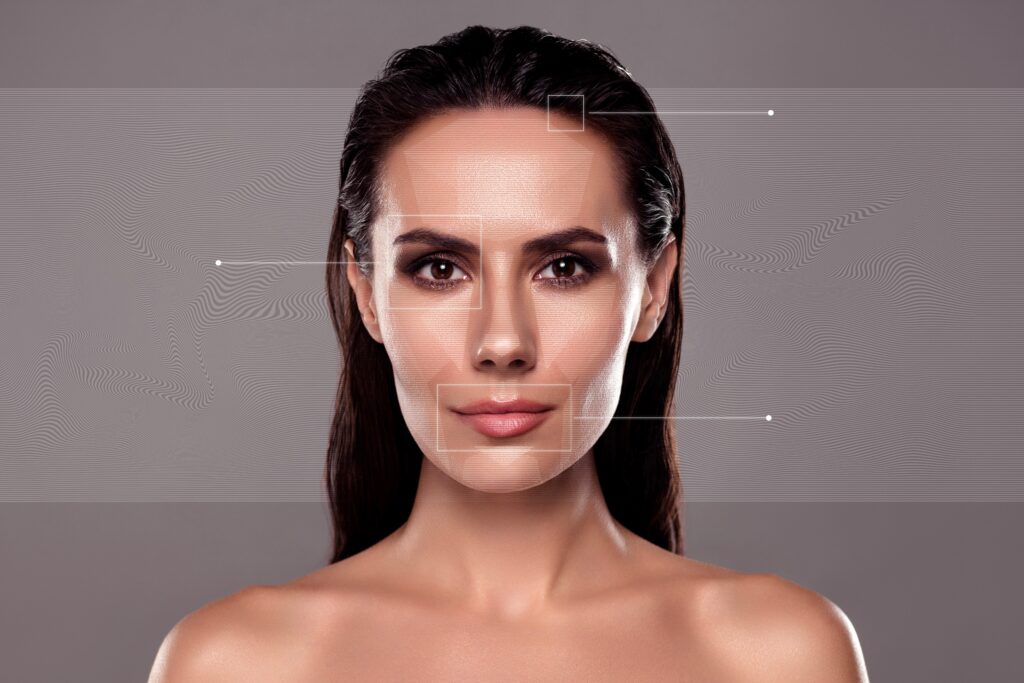
Aesthetics explores how AI-generated imagery is reshaping patient expectations
According to a survey by the British Association of Aesthetic Plastic Surgeons (BAAPS), 15% of responding members said they had experienced patients bringing artificial intelligence (AI)-generated images of themselves to consultations.¹ BAAPS shares the survey, which features responses from 59 of its members, points towards a growing trend of patients using generative AI to visualise idealised versions of their faces.¹
BAAPS explains these images are contributing to what has been termed the ‘AI face’.¹ However, the association warns that patients may mistake these digitally altered images for achievable surgical outcomes.¹
To explore how the specialty can manage the growing influence of AI-generated imagery on patient expectations, Aesthetics spoke to ambassador for the Body Dysmorphic Disorder Foundation and independent nurse prescriber Julie Scott as well as Ms Nora Nugent, plastic surgeon and president of BAAPS.
Why AI images blur the line between aspiration and reality
Scott explains that AI-generated images may carry more weight than traditional celebrity references. “The difference is that a celebrity image is clearly someone else, whereas an AI-generated image shows the patient a different version of themselves. Because it still looks like them, the result can feel much more achievable, even when it may not be realistic,” she explains.
Ms Nugent adds that the biggest challenge is that once a patient has seen an AI-generated image of themselves, it becomes a powerful reference point. She notes, “It can be very difficult to explain that surgery cannot simply reproduce every change that an algorithm has made to a photograph. We can improve and enhance features, but we cannot rewrite anatomy or guarantee a digitally perfect outcome.”
Managing AI images in consultations
Ms Nugent explains that AI imagery cannot account for the clinical factors that must inform every treatment decision. “AI can create an image without having to consider the individual behind it, their anatomy, their medical history, how they will heal or how they will age. A practitioner must consider those things. The aim should never be to turn a real person into an AI-generated image; it should be to understand what that individual wants and establish what can safely and realistically be achieved,” she concludes.
Consent, governance and when to pause treatment
Scott notes that AI-generated imagery enters consultations in different ways, whether patients bring in images they have created themselves or practitioners use visualisation tools as part of the discussion. In either case, she says it is important to consider how these images may shape a patient’s understanding of what treatment can achieve.
Scott notes, “Good consent is not just discussing risks. It is making sure the patient genuinely understands the limitations of treatment and has realistic expectations.” She adds that while there are positive applications for AI-powered visualisation, it must be considered within clinical governance.
“Practitioners need to understand the technology they are introducing into their consultations, including how images and patient data are being processed and stored. I also think there needs to be a clear record of what was shown to the patient and the context in which it was discussed, particularly where that visualisation may have influenced their decision to proceed,” she explains.
Where a shared, realistic understanding cannot be reached, Scott says treatment should not proceed. “If, after that discussion, I still felt their expectations were unrealistic, I would pause the treatment journey, explain my rationale fully and not proceed with treatment. That gives the patient space to reflect and ensures that any future decision is based on realistic expectations rather than the image itself.”
Scott highlights BDD as a particular concern, as AI imagery may reinforce an already distorted perception of appearance. She advises psychological screening throughout the treatment journey.
“If BDD is known or suspected, the priority has to be the patient’s psychological wellbeing, with appropriate assessment and referral where necessary, rather than trying to recreate the image,” she says.
Is AI creating a new beauty ideal?
BAAPS is concerned that AI could increasingly influence perceptions of what constitutes a normal or desirable face, potentially contributing to a homogenised aesthetic in which highly symmetrical, digitally perfected features become the benchmark against which real faces are judged.¹
Scott says she is not necessarily seeing patients request identical AI-generated features, but she has noticed a move towards a more perfected, generalised look.
“My concern is that repeated exposure to these highly idealised faces starts to make that look feel normal, and we lose some appreciation for the features that make people individual.”
She adds, “There is also a risk that ethnic characteristics become softened or diluted as everything moves towards a similar aesthetic. For me, beauty should still be about the individual, rather than patients moving towards the same version of perfection.”
Scott says she would use an AI image to understand what a patient likes about it and why, while making clear that it is only a starting point for discussion rather than a realistic treatment outcome.
“Treatment should always respect the individual and the features that make them who they are,” she adds.
The bottom line
BAAPS is urging practitioners to ask patients for both the unedited original image as well as the AI-altered version during a consultation. The association recommends that practitioners use these images in addition to their clinical photography and expertise to discuss what is possible. BAAPS adds that the prevalence of AI-generated images being brought into consultations underlines the importance of a thorough consultation with a properly qualified practitioner before deciding to undergo aesthetic treatments.¹
References
- British Association of Aesthetic Plastic Surgeons, ‘BAAPS warns of rise in patients bringing AI-generated faces to cosmetic surgery consultations’, 2 September 2026 https://baaps.org.uk/media/press_releases/1901/baaps_warns_of_rise_in_patients_bringing_aigenerated_faces_to_cosmetic_surgery_consultations