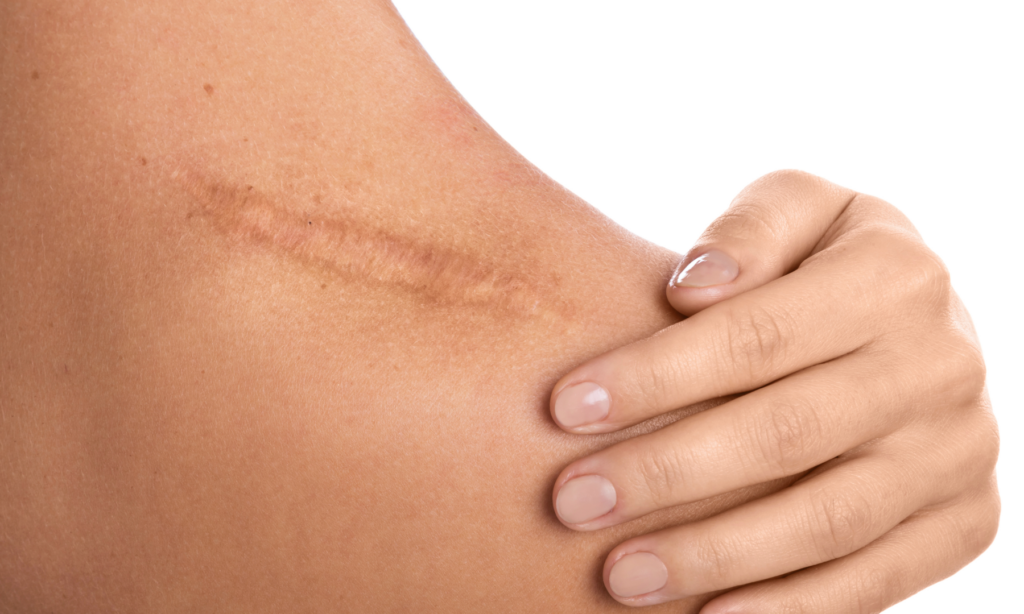
Dr Jordan Faulkner examines how multimodality treatments may influence scar remodelling
Surgical scars undergo prolonged and dynamic remodelling over 12-18 months, with collagen organisation, vascular maturation and extracellular matrix restructuring continuing well beyond the early healing phase.¹–³ This prolonged timeline makes it challenging to determine how much clinical improvement reflects natural maturation versus treatment effect. Regenerative treatments, such as polynucleotides and hyaluronic acid (PN-HPT and HA) and fractional CO₂ laser resurfacing, are supported by an expanding body of evidence demonstrating benefit in surgical, traumatic and acne scar remodelling.⁴–⁷ PNs have been shown to enhance fibroblast proliferation, support extracellular matrix recovery and modulate inflammation, while fractional CO₂ laser therapy remains one of the most consistently validated modalities for collagen remodelling and scar texture improvement.⁴–⁷
Hypopigmentation in scars can be particularly challenging to treat, as restoring lost pigment is often more difficult than reducing excess pigmentation. Emerging approaches such as fractional…