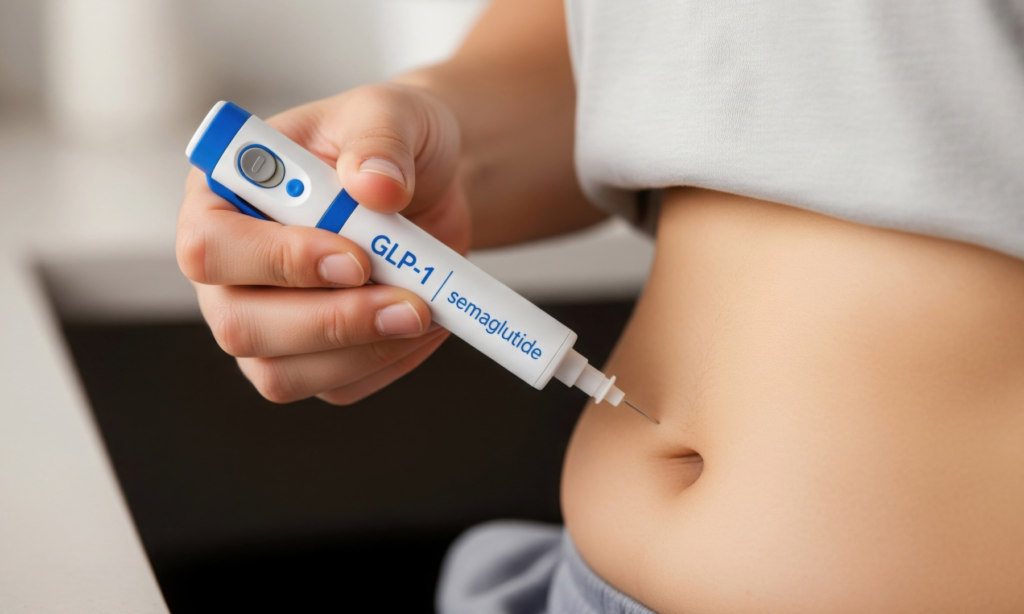
Dr Marwa Ali examines the role of body devices in GLP-1–associated weight loss
The use of glucagon-like peptide-1 (GLP-1) receptor agonists, such as semaglutide and tirzepatide, has grown rapidly in medical weight management.¹ With patients achieving significant weight loss and improvements in metabolic health, many seek ways to maintain their new shape and skin quality. While GLP-1 therapy reduces adipose tissue, it can also adversely affect skin quality and structural support.² Reduced subcutaneous support can result in laxity, soft-tissue deflation and altered contours, particularly in the face, neck, abdomen and extremities.³
GLP-1 body weight loss
In clinical practice, GLP-1-driven weight loss often presents with characteristic patterns of tissue change.⁴ Patients may report that weight reduction has occurred relatively quickly, with visible loss of subcutaneous fat in areas such as the face, neck, abdomen, arms and thighs. Mild laxity presents as early skin…